
Nov
Animal Intuition & Safety
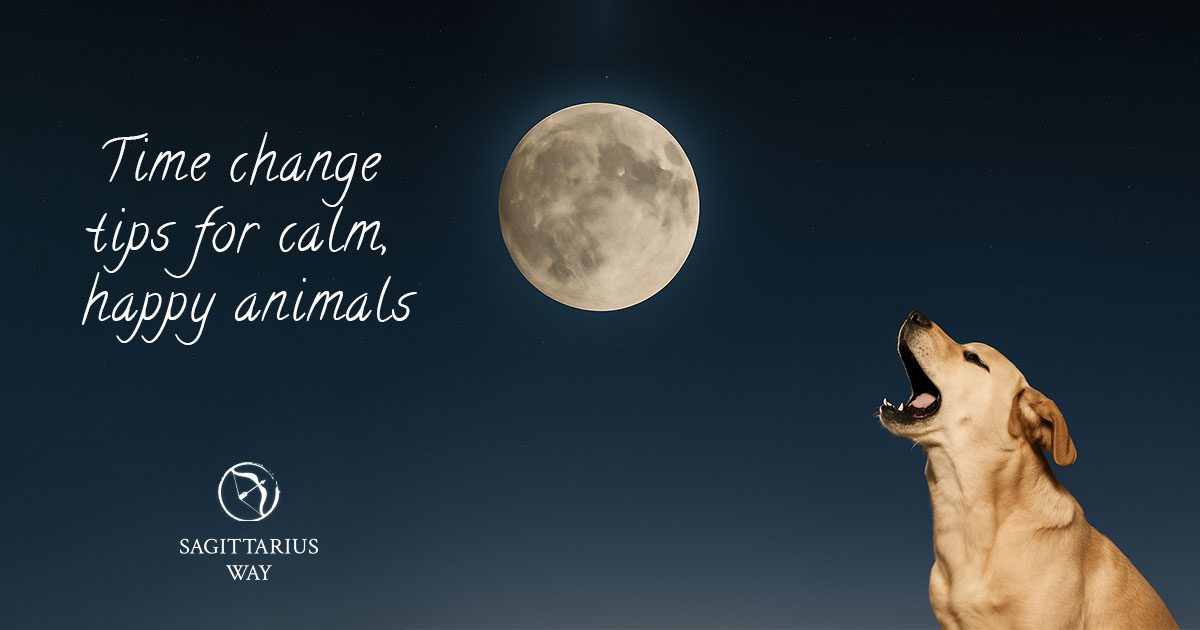
Daylight saving time and animal behaviour: What Dog, Cat and Horse owners should know?
Hello animal-loving friend,
We all feel it when the clocks shift; losing or gaining an hour can throw off our own sleep and routines. But what about our beloved animals? Even if they don’t understand why the clock changed, they certainly feel the difference. Here’s how it plays out for dogs, cats and horses, and how you can gently support them through the transition.
Why the time shift matters
Animals rely on the rhythm of sunrise and sunset, feed time, walk time, and turnout for horses. Their internal body clocks (circadian rhythms) follow these cues more than the number on the clock. When our schedule shifts by an hour, their world may briefly feel out of sync. For example, a dog used to breakfast at 7:00 am might feel hungry at 6:00 am because their body expects the old routine. Research shows pets may experience disrupted eating, sleep or activity patterns during this shift.
What to watch for
- Dogs: May wake early, beg for breakfast at the “old” time, or show a bit of restlessness.
- Cats: Since many are most active at dawn/dusk, changes in light + schedule may shift their behaviour. They might meow earlier or act extra alert.
- Horses: Because they thrive on very consistent routines, even a one-hour shift in feeding, turnout or barn time can cause mild stress, pacing or impatience. While less data exists compared to pets, equine professionals emphasise that routine is key.
4 gentle ways to support your animals
- Pre-adjust in small steps: A few days before the clock changes, move feedings, walks or turnout by ~10-15 minutes each day. This way, the full hour shift feels softer.
- Keep your cues familiar: Try to keep as many daily cues (feeding order, play time, barn lighting) consistent. The animals may not know the clock changed, but they know your rhythm.
- Split the change if needed: If your dog or cat is very food-motivated, you could offer a small snack at the old time and a full meal at the new time for a day or two. Helps ease hunger stress.
- Be patient and consistent: Some animals adjust in a day or two, others may take up to a week. Watch for signs of confusion (early wake-ups, more vocalisation, slight appetite changes) and gently guide them back into the new rhythm.
Final thoughts
The clock change doesn’t harm your animals, but it does ask them to shift their internal rhythm a little. With your gentle support, connection and consistency, you can help them move through this transition effortlessly. In doing so, you deepen the trust between you and that’s the heart of what we’re here for.
Stay present. Stay gentle. Your animals feel your calm.
Warmly,
Sagittarius Way